Ancient Extinction Fueled Jawed Vertebrate Boom
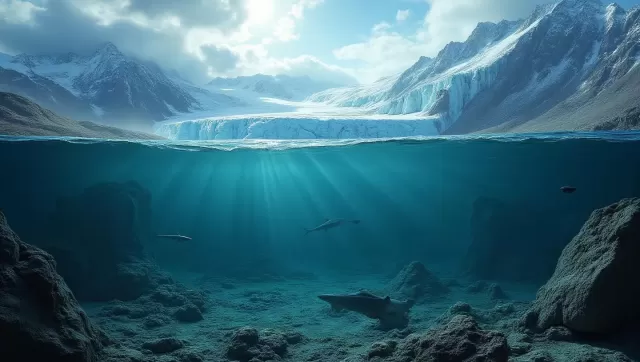
Around 445 million years ago, a planetary deep freeze triggered one of the most severe die-offs in Earth's history. In a geological instant, colossal glaciers smothered the southern supercontinent, sea levels plummeted as water became locked in ice, and ocean chemistry transformed. This crisis, the Late Ordovician Mass Extinction, erased approximately 85% of all marine species.
Emerging research reveals this catastrophe was not merely an end, but a pivotal beginning. A groundbreaking study demonstrates that this ancient devastation created the precise conditions for vertebrate life to flourish, ultimately setting the evolutionary course that led to humans and most modern animals.
The Alien World of the Ordovician
Before the freeze, Earth was a foreign planet. A vast supercontinent dominated the southern hemisphere, encircled by warm, shallow, life-rich seas. With no polar ice caps, a greenhouse climate prevailed. Simple plants had just begun to colonize barren landmasses, while the oceans teemed with bizarre life: forests of giant sea sponges, scuttling trilobites, human-sized sea scorpions, and massive shelled cephalopods. In this world, the earliest jawed vertebrates were minor, unassuming players.
The Twin Pulses of Destruction
The extinction event struck in two devastating waves, though its ultimate trigger remains debated by scientists. The fossil record, however, marks a stark boundary.
- First, a rapid climatic shift from greenhouse to icehouse conditions expanded glaciers, draining vital shallow-sea habitats.
- Millions of years later, as survivors began to stabilize, the climate reversed. Melting ice flooded oceans with warm, oxygen-poor water, delivering a final blow to species adapted to the cold.
Refuge and Opportunity in Isolation
During this turmoil, surviving vertebrates were pushed into isolated refuges—pockets of biodiversity separated by deep ocean barriers. Within these safe havens, jawed vertebrates found their opportunity.
Researchers compiled a vast fossil database spanning the extinction period. By reconstructing these ancient refuge ecosystems, they tracked a clear, steady rise in jawed vertebrate diversity following the extinction pulses. "The mass extinction pulses led directly to increased speciation after several millions of years," notes the study.
How Geography Forged Evolutionary Winners
The team's biogeographic analysis—the first of its kind for a mass extinction—mapped where these changes occurred. It identified key refugia, like the region of modern South China, which preserved the earliest complete fossils of early shark relatives. These jawed fishes remained geographically restricted for millions of years before later evolving the ability to disperse across open oceans.
The study answers a fundamental evolutionary question: did new traits create new opportunities, or did opportunity drive diversification? The evidence points to the latter. Confined to refuges, jawed vertebrates entered ecosystems where many ecological roles had been emptied by the extinction. This abundance of vacant niches allowed for rapid evolutionary experimentation and adaptation, much like the famed diversification of Darwin's finches on isolated islands.
An Ecological Reset, Not a Blank Slate
Importantly, the extinction did not wipe the slate completely clean. For 40 million years after, jawless vertebrates continued to dominate many marine realms. The event instead initiated what scientists term a "diversity-reset cycle." Ecosystems were rebuilt, with new species—particularly jawed vertebrates—gradually filling functional roles once held by extinct groups like conodonts and certain arthropods. This pattern of post-crisis ecological rebuilding repeated throughout the ancient Paleozoic era.
The Legacy of Ancient Survivors
By synthesizing data on location, form, ecology, and biodiversity, this research illuminates how life reassembles itself after global disaster. It clarifies why jaws became a pivotal evolutionary innovation and why jawed vertebrates ultimately rose to dominance. Every modern fish, bird, reptile, and mammal traces its lineage back to those resilient survivors who endured an ancient ice age in isolated refuges, seizing a chance to reshape the future of life on Earth.