Rebuilding the Harz: Biodiverse Forests for Resilience
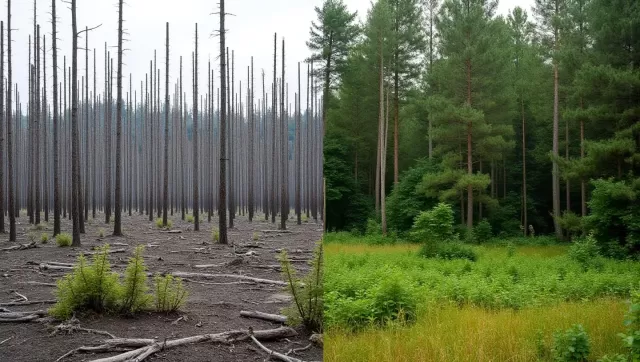
The vibrant green of a Harz mountain spring is now punctuated by a stark reminder of change. Across the rolling peaks of northern Germany, countless grey, skeletal trunks stand where a thriving spruce forest once grew. This dramatic transformation is the result of a devastating bark beetle outbreak, fueled by consecutive years of drought and intense heat since 2018. The event has forced a fundamental reconsideration of forestry practices across the region.
A Crisis Forcing Change in Forestry
The scale of the devastation has made a return to traditional methods unthinkable. Simply replanting the lost spruce monocultures would risk repeating the catastrophe. Foresters are now pioneering a different strategy, introducing pockets of beech, fir, and sycamore among the surviving trees. The goal is to cultivate a more biodiverse and resilient landscape for the future.
This shift comes at a heavy personal cost for those managing the forests. Teams have spent years in a relentless cycle of identifying and removing infected trees, a grinding process that has taken a significant toll on morale and well-being.
The Wider European Climate Challenge
This pattern of forest decline is not unique to Germany. As Europe's climate warms, bringing more extreme weather, similar diebacks are being recorded from Scandinavia to the Mediterranean. Ancient woodlands are struggling to regenerate, and peatlands are drying out.
The ecological damage is now reflected in climate data. The capacity of European lands to absorb carbon dioxide has fallen sharply since 2010, a decline accelerated by forest loss. This unexpected reduction in nature's carbon sink is jeopardizing national and EU climate targets, demonstrating that forests cannot be commanded to meet political goals.
The Debate Over Natural Carbon Sinks
This reality has intensified debate among experts about including natural carbon sinks in national climate commitments. While proponents argue it encourages better stewardship of natural resources, critics warn it creates a dangerous loophole. There is a risk that governments could rely on projected carbon absorption from forests to offset slower action on phasing out fossil fuels, a approach already proving problematic in some nations.
A Living Laboratory for Resilience
In the Harz mountains, the path forward is being planted. In contrast to the gloomy monoculture stands, experimental areas showcase a different vision. Here, a diverse mix of oak, maple, beech, Douglas fir, and spruce creates a multi-layered, vibrant forest. Sunlight filters through a varied canopy to the rich undergrowth below.
This method leverages a key scientific insight: biodiverse forests are more resilient. Research confirms that tree diversity protects against drought-induced die-off and supports growth during dry periods. Monocultures, by contrast, are far more vulnerable to pests, disease, and wildfire—all threats intensifying with climate change.
The Harz landscape has endured centuries of challenges, from mining to acid rain. The current crisis, however, demands a new approach for an era of global heating. A mixed forest ensures that if one species is attacked, others will thrive and maintain the forest structure.
Beyond ecology, these thriving mixed stands offer something equally vital: hope. For foresters who have witnessed a lifetime's work vanish in a few years, these resilient groves represent a meaningful and positive goal for the future.