Europe's Gas Shift: Nord Stream's End
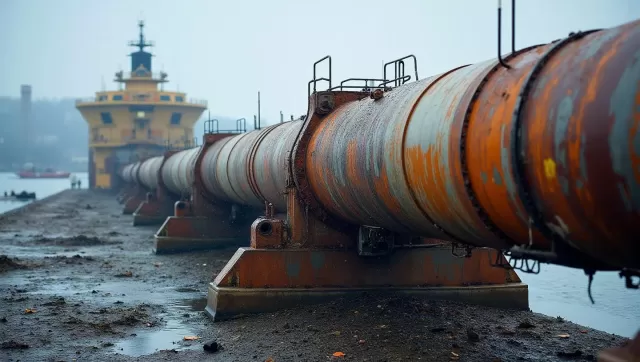
Europe is currently finalizing a strategy to completely halt Russian gas imports by late 2027. This legislative push effectively places a ceiling on Moscow's energy influence over the region and transforms billions of dollars worth of infrastructure into stranded assets. Among the most significant casualties are the twin Nord Stream subsea systems. These pipelines fell victim to sabotage shortly after the conflict in Ukraine escalated, leaving the $11 billion Nord Stream 2 project uncertified and idle.
While speculation persists that a future peace agreement could revive these energy arteries, the geopolitical reality suggests a different outcome. Diplomatic efforts to broker a ceasefire have stagnated, with opposing sides maintaining strict boundaries regarding territorial concessions. Recent commentary from U.S. political figures indicates skepticism regarding a swift or peaceful resolution, casting doubt on the likelihood of a near-term diplomatic breakthrough.
Infrastructure in Limbo: Is Repair Feasible?
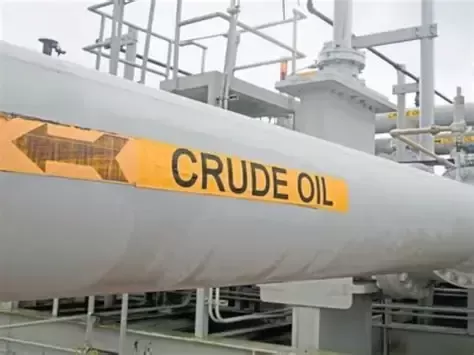
Despite the political freeze, questions remain about the technical viability of the pipelines. In early 2024, Danish authorities granted permission for preservation efforts within their exclusive economic zone. These measures are designed to prevent corrosion caused by oxygenated seawater entering the ruptured lines.
According to energy experts, including analysts from the Carnegie Russia Eurasia Center, the infrastructure is not entirely beyond saving.
Partial Functionality: One strand of the pipeline network reportedly maintains operational integrity.
Repair Costs: Estimates suggest that replacing damaged sections could cost approximately $1 billion—a significant sum, yet manageable relative to the original construction costs.
Current State: The pipelines currently sit largely unmonitored, filled with stagnant gas, awaiting a political thaw that may never come.
However, the Danish Energy Agency notes that no preservation work has actively commenced, and any future operation would require meeting stringent regulatory conditions.
The Political and Economic Divide
Even if the engineering challenges were solved, the political appetite for reintegrating Russian energy is practically non-existent across much of the continent. Prior to 2022, Russia supplied roughly 45% of Europe's gas; strictly updated estimates place that figure closer to 13% today.
The resistance to reviving the Nord Stream project stems from several key factors:
Polish and Ukrainian Opposition: Poland has explicitly called for the dismantling of the infrastructure. Meanwhile, the transit agreement between Russia and Ukraine expired at the end of 2024 without renewal, severing another traditional supply route.
United States Market Interests: Washington has strategically positioned itself to fill the void left by Moscow, increasing Liquefied Natural Gas (LNG) exports to the bloc. A return to Russian dependence would undermine U.S. market share.
European Legislation: New EU regulations have established a provisional framework to ban LNG imports by 2026 and pipeline gas by late 2027. This legal wall makes a return to business-as-usual highly improbable.
Market Realities and Future Outlook
Germany remains the complex variable in this equation. As an industrial powerhouse directly connected to the Nord Stream network, the country faces high energy costs that hamper its manufacturing sector. However, the overarching European strategy prioritizes energy independence over the allure of cheap imports.
Market analysts note that while Europe has not fully recovered from the energy crisis—with benchmark prices hovering well above pre-war levels—the focus has shifted. The narrative is no longer just about transition but about "energy addition" to support new demands, such as the burgeoning artificial intelligence sector.
While a theoretical scenario exists where a change in Russian leadership could reopen trade channels, the volume would likely be capped significantly lower than historical levels. The remaining operational capacity of the undamaged pipeline section is roughly 27.5 million cubic meters, a fraction of previous flows.
Ultimately, the combination of new European export terminals, increased U.S. supply, and a strategic pivot toward renewables creates a bearish outlook for gas prices and Russian influence. With Moscow increasingly turning toward Asian markets like China, the era of European reliance on Siberian gas appears to be drawing to a permanent close.